
Variety Vs. Chemotype: What is the Difference
Megan Tiehes, Certified Professional Aromatherapist
4/27/2026
Have you ever noticed the letters Var. (variety) or CT (chemotype) in the name, more specifically the Latin name, of an essential oil? What do they mean, and why are they important?
One of the first things to understand is that, when we see these abbreviations or terms, we are actually seeing information about the plants that the oils were derived from. These terms in no way signal that the oils have been adulterated or changed from the natural forms into something else.
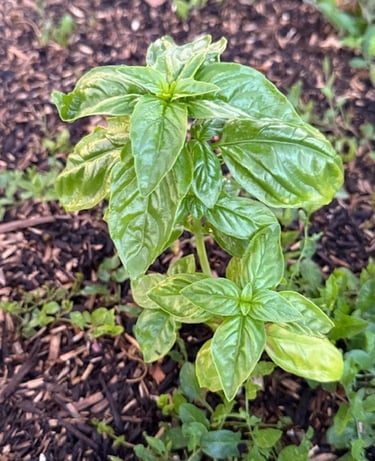
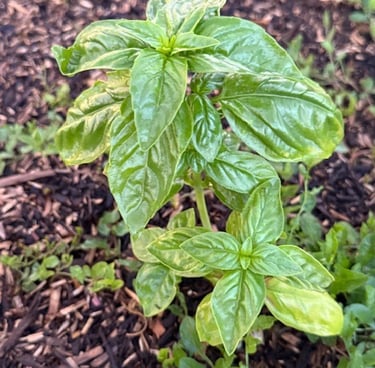
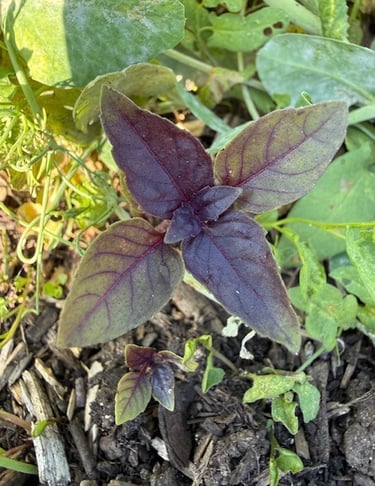
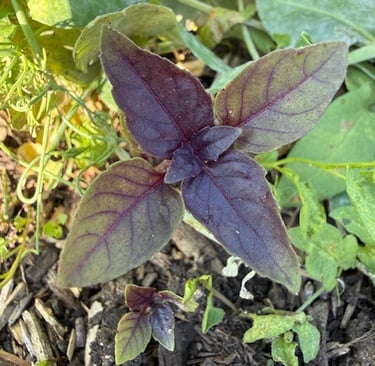
Here are two pictures of basil plants:
All basil plants belong to the genus Ocimum; however, they are not all the same species or variety. There are many different species of basil and even more varieties.
The plant in the picture on the left is Ocimum basilicum (the common name is sweet basil), while the plant on the right is Ocimum basilicum var. purpurascens (the common name is “Dark Opal” basil or purple basil). Notice that the first plant is named with just the genus (Ocimum) and species (basilicum), while the second plant is named with a variety designation (var. purpurascens). Why?
These two plants are the same genus and species, but we can clearly see that they have different characteristics—for example, one is green and the other is purple. In plant taxonomy, the similarities between plants help to fit them into each progressive category, often beginning with the kingdom and ending with the species. However, there can also be subcategories, under the species, that help offer a more detailed and specific placement of the plant, or in the case of aromatherapy, the essential oil. These sub-categories are where varieties and chemotypes reside.
In the case of “Dark Opal” basil, it is more specifically what is known as a cultivar (cv.). This means that its specific characteristics have been selected and maintained through human cultivation rather than occurring naturally.
When it comes to plants, think of a variety as a divergence in physical characteristics — something different about the way the plants look, such as color, size, or leaf shape.
When it comes to aromatherapy, knowing the variety is not always as prioritized as knowing the chemotype of the plant.
Here are two pictures of a Rosemary (Rosmarinus officinalis) plant
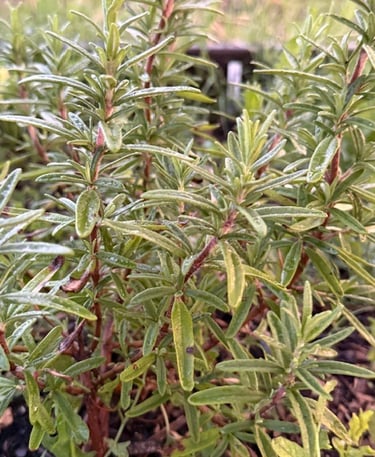
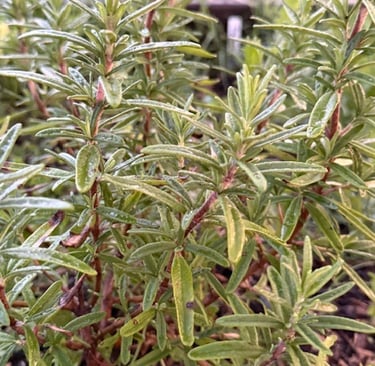
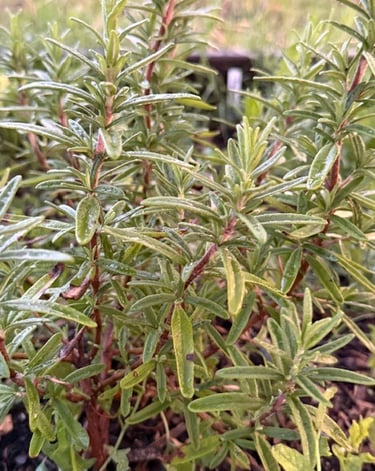
They are both the same exact plant and the same exact picture. Let’s assume that we split the original plant into two plants and that each of those plants is represented by one of the pictures. Now let’s assume that we planted one of the plants in a valley that tends to have more of an arid, but consistent climate, while we have planted the other plant on a mountain side that has much cooler temperatures, a higher humidity, and gets quite a bit of rain.
The plants will still be the same as far as the genus and species. As there are no distinguishable visible differences, there will not be a variety; however, the chemical constituents within the plants will no longer be identical. When essential oils are extracted from these plants, the chemical constituents they contain will be present at varying levels. These variations in the chemical makeup are known as chemotypes. The chemotype of an essential oil is identified by a dominant chemical constituent.
For example:
Rosemary (Rosmarinus officinalis ct. camphor) is dominated by the constituent camphor.
Rosemary (Rosmarinus officinalis ct. α-pinene) is dominated by the constituent α -pinene.
Rosemary (Rosmarinus officinalis ct. 1,8-cineole) is dominated by the constituent 1,8-cineole.
Each of these constituents has its own therapeutic benefits and safety concerns.
Understanding the chemotype of an essential oil is valuable for safety and clarity on how best to use each oil for the desired benefits.
To put it simply, a chemotype refers to a difference in the chemical makeup of a plant rather than its appearance. Chemotypes can be influenced by factors such as temperature, rainfall, humidity, soil conditions, growing location, and more.
*In 2017, Salvia rosmarinus became the accepted scientific name after DNA analysis identified rosemary as belonging within the genus Salvia, rather than the previously accepted genus Rosmarinus. You may see one or both names on a bottle of essential oil. Rosmarinus officinalis is still commonly listed and has been used for over 250 years, slowing the transition to the new name. I have used the older name in this post as it is still very familiar in aromatherapy.
References:
Drew, B. T., González-Gallegos, J. G., Xiang, C. L., Kriebel, R., Drummond, C. P., Walker, J. B., & Sytsma, K. J. (2017). Salvia united: The greatest good for the greatest number. Taxon, 66(1), 133–145. https://doi.org/10.12705/661.7
Royal Botanic Gardens, Kew. (n.d.). Salvia rosmarinus Spenn. Plants of the World Online. Retrieved April 26, 2026, from https://powo.science.kew.org/
Tisserand, R., & Young, R. (2014). Essential oil safety: A guide for health care professionals (2nd ed.). Churchill Livingstone.
© 2025. All rights reserved.